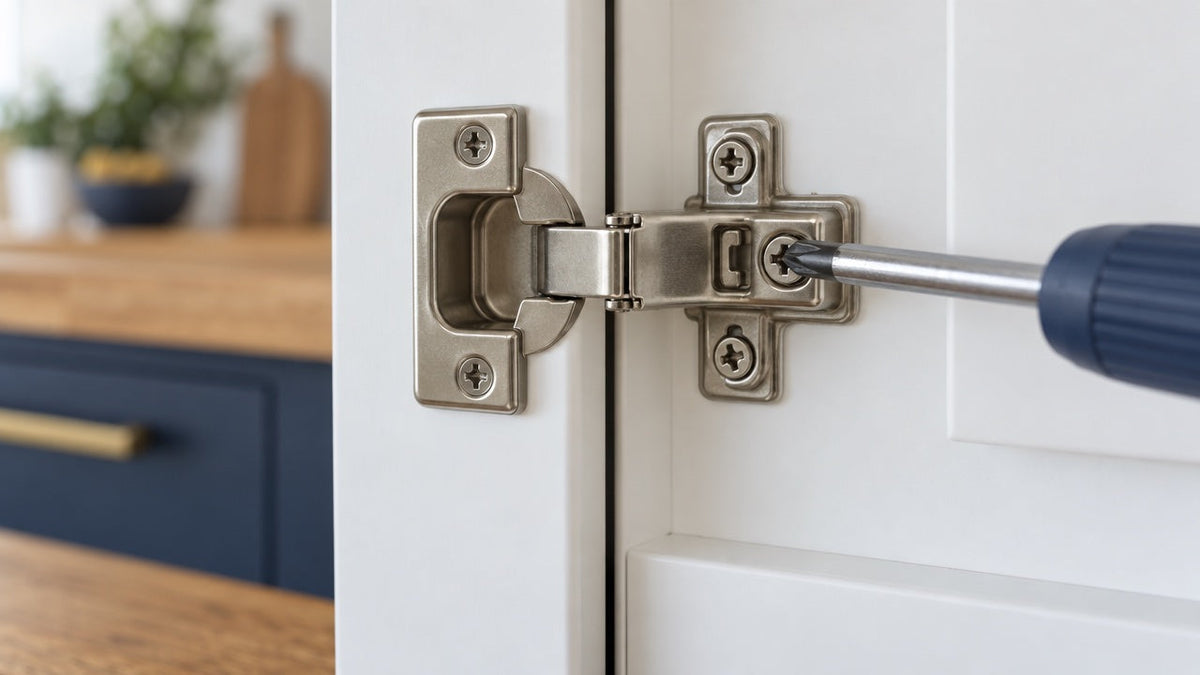
Short answer: most concealed (European-style) cabinet hinges have three adjustment points: one moves the door left and right, one moves it in and out (depth), and the mounting plate sets the height. Turn one screw a quarter turn, close the door, check the gap, and repeat. If the door keeps sagging, the problem is usually a loose or stripped mounting screw, which you can fix with a repair plate.
Key takeaways
- Adjust one screw at a time, a quarter turn at a time.
- Which screw does what varies by brand, so test and watch how the door moves.
- A door that keeps dropping usually has a loose or stripped screw hole, not a faulty hinge.
- Hinge repair plates give screws new material to grip in damaged particleboard.
What you need
- A Phillips or Pozi screwdriver (a hand tool is safer than a drill for fine adjustment)
- A pencil and a small level or straightedge
- Wood glue and toothpicks or a small hardwood dowel for stripped holes
- A hinge repair plate if the screw holes are badly damaged
The three adjustments on a concealed hinge
| Problem | Adjustment | How to do it |
|---|---|---|
| Uneven gap between two doors | Side-to-side | Turn the lateral screw on the hinge arm a quarter turn and recheck |
| Door sits proud or too deep | Depth (in and out) | Turn the depth screw or cam at the back of the arm |
| Door is too high or too low | Height | Loosen the mounting plate screws, slide the plate, and retighten |
| Door will not stay closed | Depth and gaps | Adjust depth, then check for a neighbouring door touching |
Hinge brands label and place their screws differently. If you are not sure which screw does what, turn one a quarter turn and watch how the door moves.
How to adjust cabinet hinges, step by step
- Open the door fully and look for the adjustment screws on each hinge arm and the screws on the mounting plate.
- Decide what is wrong: a gap that is too wide or narrow, a door that is high or low, or a door that sticks out.
- Turn one screw a quarter turn and close the door. Check the result before turning anything else.
- Work across all hinges on the door. A door with two or three hinges needs matching changes on each one so it does not twist.
- Fix height last. Loosen the plate screws slightly, move the door up or down, then retighten.
- Check the doors next to it. Gaps should look even from the top to the bottom.
How to fix a sagging cabinet door
If a door drops again after adjusting, the hinge is probably coming loose from the cabinet or the door. Check for these causes:
- Loose screws: tighten them until snug.
- Stripped screw hole: the screw spins without gripping. Remove the hinge, fill the hole with glue and a hardwood dowel or toothpicks, let it dry, then drill a small pilot hole and refit.
- Damaged particleboard or MDF: the board has crumbled around the hole. Use a stainless steel hinge repair plate so the screws bite into metal and fresh board.
- Bent hinge arm: if the arm is bent or the damper is leaking, replace the hinge.

Browse the full range of hinge repair plates and accessories, including butterfly and square plates, fixing plates and mounting plates.
When to replace the hinge instead
- The hinge arm is bent, cracked or rusted.
- A soft-close damper no longer slows the door. You can often add a new hinge damper or fit a new cabinet hinge.
- You want to switch to soft-close or self-closing, as covered in our guide to types of cabinet hinges.
Common hinge adjustment mistakes
- Turning screws too far. Small turns make big changes. Go a quarter turn at a time.
- Adjusting only one hinge. If a door has two or three hinges, make matching changes on each so the door does not twist.
- Over-tightening mounting screws. This strips the hole, especially in particleboard and MDF.
- Using a drill on the adjustment screws. A hand screwdriver gives you control and avoids stripping the screw head.
- Ignoring a worn hinge. A bent arm or leaking damper will not hold an adjustment for long.
Frequently asked questions
How do you fix a misaligned cabinet door?
Loosen nothing at first: turn the adjustment screws on the hinge a quarter turn at a time. One screw usually moves the door left or right, another moves it in or out, and the mounting plate sets the height. Check the gap after each turn. If the door still will not line up, check for loose mounting screws or a stripped screw hole.
Why will my cabinet door not close completely?
The most common causes are a hinge adjusted too far out, a door touching its neighbour, a loose or stripped mounting screw, or a hinge arm that is bent. Adjust the depth screw first, then check the gaps between doors, then inspect the hinge for damage.
How tight should cabinet hinge screws be?
Snug, but not forced. Over-tightening can strip the hole, especially in particleboard or MDF. Stop turning when the screw is firm and the hinge no longer moves.
Can I fix a stripped hinge screw hole without replacing the cabinet?
Yes. You can fill the hole with glue and a hardwood dowel or toothpicks, use a longer screw, move the hinge to fresh wood, or fit a hinge repair plate that gives the screws new material to grip.
How do I adjust old-style or surface-mounted hinges?
Surface-mounted hinges such as butterfly and flag hinges usually have no adjustment screws. You can loosen and reposition them, add a thin shim behind a leaf, or replace the hinge. A repair plate helps when the old screw holes are worn.


